
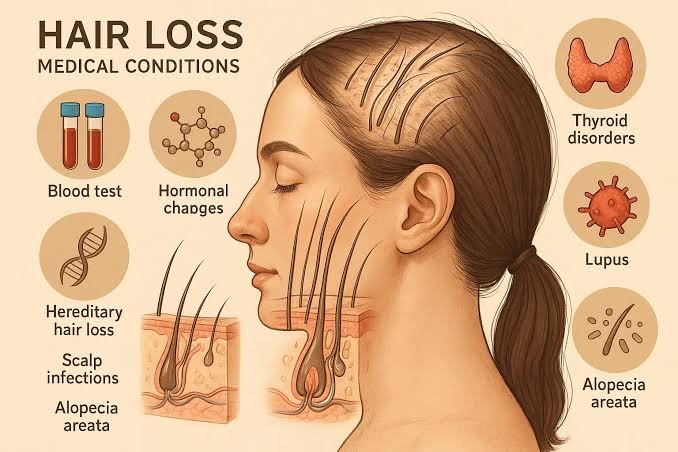
Noticing more hair than usual in your brush or shower after pregnancy can be alarming. The good news is that telogen effluvium and pregnancy are closely connected, and postpartum hair shedding is usually temporary.
During pregnancy, hormonal changes can keep more hair follicles in the active growth phase. After delivery, hormone levels change quickly, and many of those follicles eventually move into the resting phase. The result can be noticeable shedding several weeks or months after childbirth.
For most women, postpartum telogen effluvium gradually settles on its own. Understanding when the shedding starts, what it looks like, how long recovery takes, and when to seek medical advice can make the process much less stressful.
What Is Telogen Effluvium?
Telogen effluvium is a type of temporary, diffuse hair shedding that occurs when a larger-than-usual number of hair follicles enter the resting phase of the hair-growth cycle.
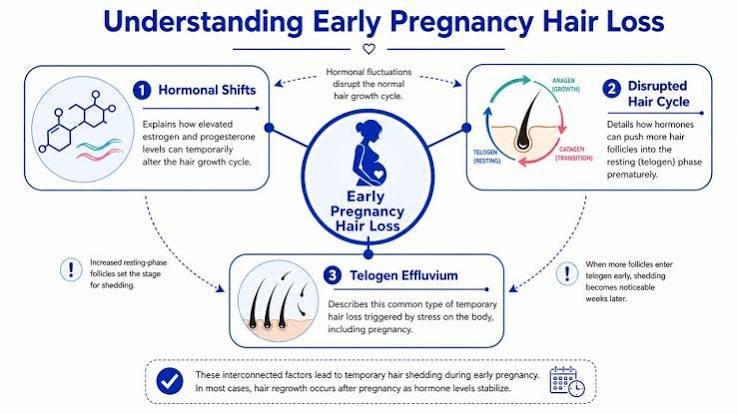
Hair normally moves through three main stages:
- Anagen: the active growth phase
- Catagen: a short transition phase
- Telogen: the resting phase, after which the hair is eventually shed
Normally, only a portion of your scalp hair is in the resting phase at any one time. When the body experiences a significant physical or hormonal change, more follicles can shift into this phase together.
Childbirth is a well-recognized trigger.
Unlike conditions that permanently damage hair follicles, telogen effluvium is generally a nonscarring form of hair shedding. New hair can continue to grow while older hairs are being released.
Can Pregnancy Cause Telogen Effluvium?
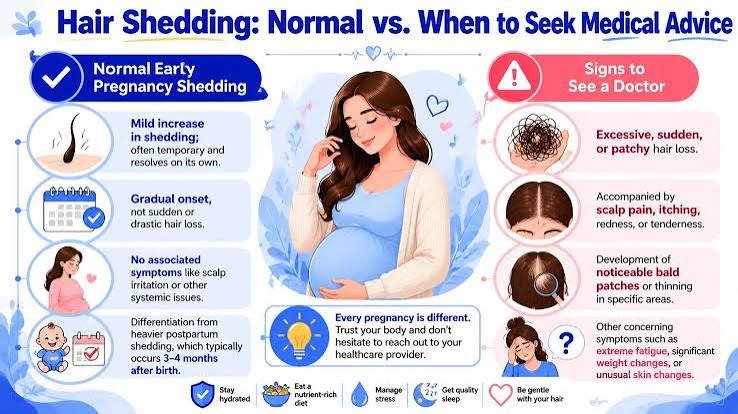
Pregnancy itself does not usually cause the classic pattern of heavy telogen shedding that many women notice after giving birth. In fact, pregnancy can temporarily make the hair appear thicker.
During pregnancy, hormonal changes can keep more follicles in the growth phase for longer. Some women therefore notice fuller-looking hair and less everyday shedding.
The major change often occurs after delivery.
Once pregnancy-related hormone levels fall, follicles that stayed in the growth phase for longer can move into the resting phase. Those hairs are not necessarily lost immediately. Because the hair cycle has a delay, noticeable shedding may appear weeks or months after the triggering event.
This is why a woman may have relatively thick hair during pregnancy and then suddenly feel that she is losing a large amount of hair after childbirth.
Read More: Shift Work and Motherhood: Health Risks, Rights, and Work-Life Balance
Why Does Postpartum Telogen Effluvium Happen?
The main reason is the hormonal shift that follows pregnancy.
Estrogen levels rise during pregnancy and help maintain more follicles in the growth phase. After childbirth, estrogen levels fall. This change can cause a larger number of follicles to enter the resting phase.
Several months later, those resting hairs are released.
The process can feel sudden because many hairs may appear to fall out at once, but the underlying change began earlier in the hair cycle.
Childbirth can also involve other factors that may influence shedding, including physical stress, blood loss, nutritional deficiencies, illness, sleep disruption and the general demands of caring for a newborn.
These factors do not mean that every case of postpartum shedding has the same cause. If shedding is unusually severe or continues longer than expected, another condition may need to be considered.
When Does Postpartum Hair Loss Start?
Postpartum hair loss does not necessarily begin immediately after delivery.
Many women first notice increased shedding a few months after giving birth. Dermatology sources commonly describe noticeable shedding around two to four months after a triggering event, with postpartum shedding often becoming particularly noticeable around the fourth month.
The exact timing varies from person to person.
For example:
Month 0: Baby is born
Months 1–2: Hair may still appear relatively normal
Months 2–4: Increased shedding may become noticeable
Around month 4: Shedding can be especially noticeable for some women
Following months: Shedding gradually decreases and regrowth becomes easier to notice
This timeline is a general guide, not a diagnosis. Individual experiences can be earlier, later, shorter or longer.
What Does Telogen Effluvium Look Like?
Postpartum telogen effluvium usually causes diffuse shedding, meaning hair comes out from across the scalp rather than from one clearly defined bald spot.
You may notice:
- More hair on your pillow
- Increased hair in the shower drain
- More strands on your brush or comb
- Hair collecting on clothing
- A temporary reduction in overall hair density
- More visible scalp because the hair looks less full
- Short new hairs appearing as regrowth begins
The scalp itself should generally look healthy.
Significant itching, burning, pain, inflammation, scaling or a rash is not typical of uncomplicated telogen effluvium and may indicate another scalp problem.
Clearly defined round or irregular bald patches are also different from the usual diffuse pattern and should be evaluated.
Is Postpartum Hair Loss Normal?
For many women, increased shedding after childbirth is a normal response to the hormonal changes associated with pregnancy and delivery.
The amount can still feel dramatic.
Seeing a large amount of hair in the shower does not necessarily mean that you are becoming permanently bald. Telogen effluvium is primarily a shedding problem, and the follicles generally remain capable of producing new hair.
However, “normal postpartum shedding” should not be used to explain every case of hair loss.
If the pattern looks unusual, the scalp changes, the shedding is prolonged, or the hair does not begin returning toward its previous fullness, it is worth speaking with a healthcare professional.
How Long Does Telogen Effluvium Last After Pregnancy?
The timeline varies, but postpartum shedding generally improves gradually rather than stopping overnight.
The American Academy of Dermatology notes that excessive shedding commonly peaks several months after childbirth and that most women regain normal fullness by their child’s first birthday. Other medical sources describe the active shedding period as commonly lasting several months.
It is important to separate shedding from regrowth.
Your hair may stop shedding heavily before it looks as thick as it did before pregnancy. Hair grows slowly, so visible density can take additional time to recover.
A simple way to think about recovery is:
Trigger → delayed shedding → peak shedding → gradual reduction → new growth → improved density
The final stage can take considerably longer than the initial reduction in shedding.
Will Hair Grow Back After Pregnancy?
In most uncomplicated cases of postpartum telogen effluvium, hair does grow back.
As the hair cycle returns toward normal, new hairs begin growing from the follicles. At first, these hairs may be short and fine, particularly around the hairline.
You may notice small new hairs standing up around the forehead or part line. This can be a reassuring sign that regrowth is occurring.
However, your hair may not immediately look exactly as it did before pregnancy. The amount of time needed for visible fullness to return depends on hair length, growth rate, the severity of shedding and whether another form of hair loss is present.
If significant thinning continues without improvement, a dermatologist can help determine whether postpartum telogen effluvium is the only issue.
Telogen Effluvium vs. Other Types of Hair Loss
Not every case of postpartum hair thinning is telogen effluvium.
Telogen effluvium
Typically causes:
- Rapid or noticeable shedding
- Diffuse thinning
- More hair in the brush or shower
- A relatively healthy-looking scalp
- A delayed onset after a physical or hormonal trigger
Female pattern hair loss
Female pattern hair loss generally develops more gradually. The central part may become wider and overall density can decrease over time.
Pregnancy-related shedding can sometimes make pre-existing female pattern hair loss more noticeable.
Alopecia areata
Alopecia areata is an autoimmune condition that can cause distinct, smooth patches of hair loss. This pattern is different from the diffuse shedding usually associated with telogen effluvium.
Nutritional or thyroid-related hair loss
Iron deficiency, thyroid disorders and inadequate nutrition can contribute to hair shedding. These possibilities become more relevant when shedding is persistent, severe or accompanied by other symptoms.
Because several conditions can look similar to a person experiencing them, persistent hair loss should not automatically be labeled telogen effluvium without appropriate evaluation.
What Can You Do About Postpartum Hair Shedding?
There is usually no need for an aggressive treatment simply because postpartum shedding has started.
The goal is to support healthy hair growth while avoiding additional damage.
Be gentle with your hair
Use a gentle approach when washing, drying and brushing.
Avoid aggressive brushing, excessive heat and hairstyles that place continuous tension on the roots.
Tight ponytails, buns and braids can contribute to traction-related hair loss when they repeatedly pull on the hair.
Eat a balanced diet
Hair growth requires adequate nutrition.
Focus on a varied diet that provides sufficient protein along with fruits, vegetables and other nutrient-rich foods.
Do not automatically start high-dose supplements because you are losing hair. If a deficiency is suspected, a healthcare professional can determine whether testing or supplementation is appropriate.
Pay attention to iron and thyroid health
Iron deficiency and thyroid problems can contribute to diffuse hair shedding.
If postpartum shedding is unusually severe or does not improve as expected, your healthcare professional may decide whether blood tests or other evaluation are appropriate.
Avoid unnecessary hair damage
During a period of increased shedding, reducing avoidable damage can help your hair look and feel healthier.
Limit excessive heat styling and avoid harsh chemical processes if they leave your hair brittle or prone to breakage.
Remember that hair breakage is not the same as shedding from the follicle. Both can make hair appear thinner, but they have different causes.
Can Minoxidil Be Used During Pregnancy or Breastfeeding?
Minoxidil should not be treated as a routine solution for postpartum shedding.
Pregnancy and breastfeeding require particular caution with medications and topical treatments. Anyone who is pregnant, breastfeeding or planning another pregnancy should discuss hair-loss treatments with an appropriate healthcare professional before using them.
Postpartum shedding caused by telogen effluvium is often self-limited, so starting a medication without establishing the cause of the hair loss may not be appropriate.
The safest approach is to identify the reason for the shedding and consider treatment only when there is a clear indication and professional guidance.
When Should You See a Doctor or Dermatologist?
Postpartum shedding is common, but some situations deserve medical evaluation.
Consider seeking professional advice if:
- Hair loss continues without improvement for an extended period
- Your hair has not regained much of its previous fullness by around one year after delivery
- You develop clearly defined bald patches
- Your scalp becomes painful, inflamed, itchy or scaly
- You notice significant thinning that continues to progress
- You have symptoms that could suggest anemia or a thyroid problem
- You are concerned that the shedding is more severe than expected
- You already had hair thinning before pregnancy
- The emotional effect of hair loss is becoming difficult to manage
A dermatologist can examine the scalp and hair pattern and determine whether further testing is necessary.
Can Breastfeeding Cause Postpartum Hair Loss?
Breastfeeding and postpartum hair loss are often mentioned together, but the main explanation for typical postpartum shedding is the hormonal transition associated with pregnancy and childbirth.
Breastfeeding can coincide with the period when postpartum shedding occurs, which can make the two seem directly connected.
If hair loss is unusually persistent or severe while breastfeeding, it is better to look at the overall picture rather than assuming breastfeeding itself is the cause.
Nutrition, sleep, stress, iron status, thyroid function and other health factors may also be relevant.
What About Vitamins for Postpartum Hair Loss?
Vitamins are not a universal cure for telogen effluvium.
If you have a documented nutritional deficiency, correcting it may be important for overall health and normal hair growth. But taking large amounts of supplements without knowing whether you need them can be unnecessary and, with some nutrients, potentially harmful.
A balanced diet should generally be the foundation.
If you suspect that pregnancy, childbirth or dietary changes have left you deficient in a particular nutrient, discuss testing and supplementation with your healthcare provider.
Can Stress Make Postpartum Hair Shedding Worse?
Yes, significant physical or emotional stress can contribute to telogen effluvium.
The postpartum period can involve major changes in sleep, nutrition, routine and emotional wellbeing. Childbirth itself is also a substantial physiological event.
This does not mean that postpartum hair shedding is “just stress.” Hormonal changes following pregnancy are an important part of the typical process.
Instead, several factors can overlap.
Taking care of yourself, eating adequately, getting rest when possible and seeking support can benefit your overall recovery even though these measures cannot instantly stop hormonally driven shedding.
A Simple Postpartum Hair-Loss Timeline
| Stage | What may happen |
|---|---|
| During pregnancy | Hair may appear thicker because more follicles remain in the growth phase |
| After delivery | Pregnancy-related hormone levels change |
| Several weeks to a few months later | Increased shedding may become noticeable |
| Around the peak | More hair may appear on the brush, pillow and in the shower |
| Following months | Shedding generally begins to settle |
| Recovery phase | New hairs grow and overall density gradually improves |
The timeline is approximate. Your experience may not follow these stages exactly.
Frequently Asked Questions
Does telogen effluvium happen during pregnancy or after pregnancy?
The noticeable shedding associated with pregnancy is more commonly seen after childbirth. During pregnancy, hormonal changes can keep more follicles in the growth phase. After delivery, the hormonal shift can cause increased shedding that becomes visible several weeks or months later.
When does postpartum telogen effluvium usually start?
Many women notice increased shedding a few months after delivery. The exact timing varies, but a delayed onset is typical because hair follicles move through their growth cycle before the affected hairs are shed.
How long does postpartum telogen effluvium last?
The active shedding commonly improves over several months. Hair can take longer to regain its previous fullness because new growth needs time to become visible and grow in length.
Will postpartum telogen effluvium cause permanent baldness?
Typical telogen effluvium is temporary and does not usually destroy the hair follicles. Most women gradually regain their normal hair fullness. Persistent or unusual thinning should be evaluated to rule out another condition.
Can telogen effluvium happen while breastfeeding?
Postpartum shedding can occur during breastfeeding, but breastfeeding itself should not automatically be assumed to be the cause. Hormonal changes after pregnancy are a major factor, while nutrition, stress, health conditions and other factors can also influence shedding.
Should I take supplements for postpartum hair loss?
Not automatically. A balanced diet is important, and supplements may be useful when a healthcare professional identifies a deficiency or recommends them for another reason. Avoid taking high-dose supplements solely because you are shedding hair.
Is it normal to lose a lot of hair after having a baby?
Increased shedding a few months after childbirth is common. However, clearly defined bald patches, scalp inflammation, severe persistent thinning or a lack of improvement over time should be assessed by a healthcare professional.
Can I use minoxidil for postpartum hair loss?
Do not start minoxidil on your own during pregnancy or breastfeeding. Discuss medication use with a qualified healthcare professional, particularly because postpartum telogen effluvium often improves naturally and other causes of hair loss may need to be considered.
When should I worry about postpartum hair loss?
Seek professional advice if shedding is prolonged, progressively worsening, accompanied by bald patches or scalp symptoms, or if your hair does not gradually regain fullness. A dermatologist can help determine whether the shedding is still consistent with telogen effluvium.
Concluion
Telogen effluvium and pregnancy are closely connected because pregnancy and childbirth can produce major changes in the hair-growth cycle. Many women experience noticeably heavier shedding a few months after delivery, even if their hair looked thicker during pregnancy.
The reassuring part is that postpartum telogen effluvium is usually temporary. Shedding generally settles as the hair cycle returns toward normal, while visible regrowth takes additional time.
The most important thing is not to panic or start aggressive treatments without knowing the cause. Gentle hair care, adequate nutrition and patience are often appropriate while the cycle recovers. If shedding is unusually persistent, patchy or accompanied by scalp changes, professional evaluation can help identify another possible cause and guide treatment.